





3D Printed Homes Real Cost And Top Companies Guide 2026
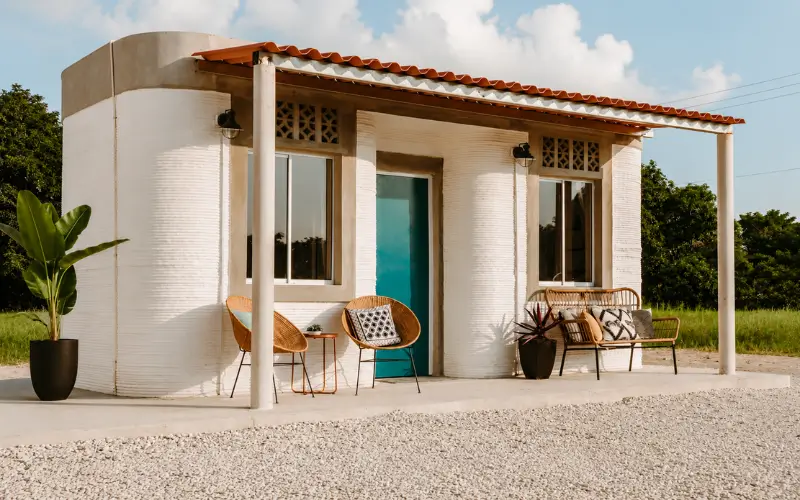
With the three-dimensional printing of concrete walls in a few days for a house that would have taken a few months before, 3D printed homes are revolutionizing the way in which homes are built. Although the technology’s attempt to speed up the building speed and reduce the need for labour, producing the walls is just part of the process. The remaining part of the total cost is due to foundations, roofing, plumbing, electrical, and interior finishes. This guide will discuss the working of 3D-printed houses, what they really cost in 2026, top companies pioneering the 3D Printing Industry, and other things that lead you to believe in 3D-printed houses as affordable housing.
How 3D-Printed Home Construction Works
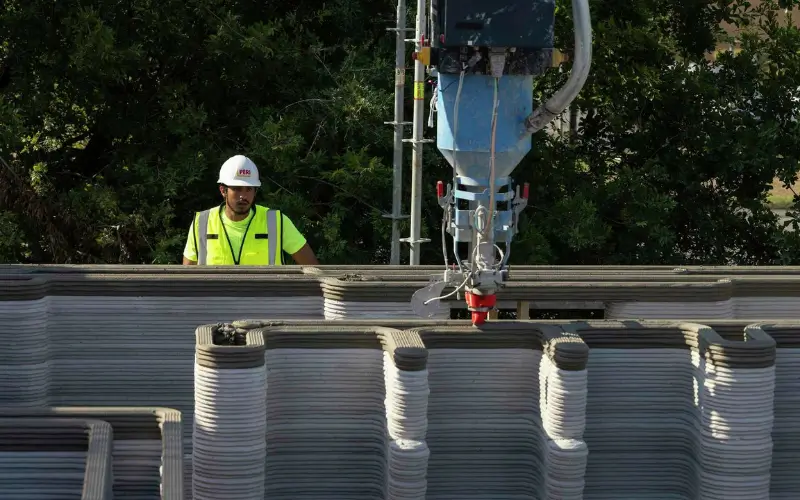
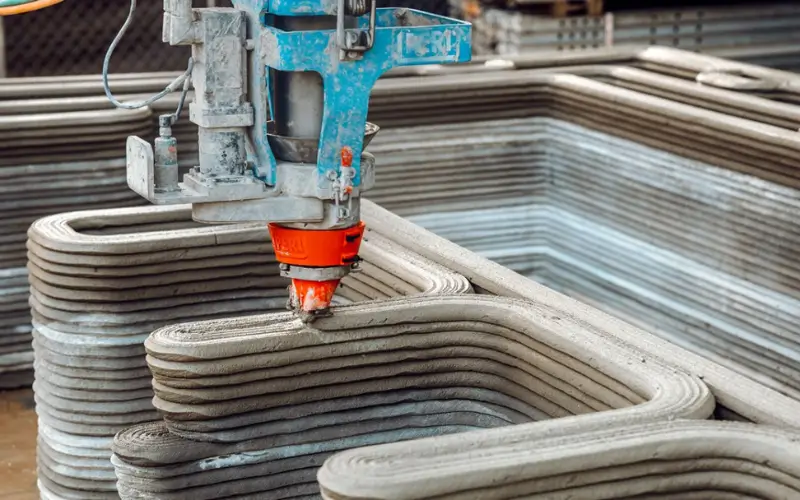
In addition, sometimes referred to as “additive construction” is an industrial-scale printing process that follows a digital blueprint to extrude a paste-like material in layers to produce walls, most commonly a specifically formulated form of concrete.
The printer is only capable of creating its structural shell, which includes floors, walls, and sometimes roofing. Plumbing, electrical wiring, windows, doors, insulation, and interior finishing still need a lot of the labor and material that’s used in conventional home construction.
The turnaround time for printing a house varies by size and design: anywhere from a day to three days for the shell, to weeks or months for a fully complete home with all the other trades needed for a move-in-ready house.
What Does a 3D-Printed House Actually Cost
This is where marketing hype and actual prices are poles apart. The cost of a house’s walls and floor printing is $10K-35K. Of course, a completed home with plumbing, electrical, insulation, roof exterior, and interior jobs completed can cost anywhere from $150,000 to $500,000 or higher, depending on size, location, and quality.
| Cost Component | Typical Range |
|---|---|
| Printed shell only (walls and floor) | $10,000 – $35,000 |
| Fully finished home (1,200-1,800 sq ft) | $150,000 – $500,000+ |
| Printed structure share of total cost | 15% – 30% of the total build cost |
| Industrial printer equipment cost | Around $1,000,000 – $1,500,000 |
This is supported by real-world listings. ICON’s Wolf Ranch community in Georgetown, Texas, is the world’s largest neighborhood of 3D-printed houses, a nd houses in the neighborhood cost $450,000 to $600,000. At $375 per square foot, the printed home sold for some $375,000 higher than the typical cost of an area home that has been conventionally built, which runs at about $268 per square foot.
Why Printed Homes Are Not Always Cheaper
- The shell–shell only; all the rest requires regular labour and materials.
- In many areas, building codes and permitting for printed walls haven’t been finalized yet, leading to delays and expense.
- Works on printed structures are still being developed by insurance companies to evaluate and compensate for their damage.
- Companies’ investment cost in equipment is very high, and will not enable their prices to fall rapidly.
Companies Leading 3D-Printed Construction
ICON (United States)
ICON is one of the most well-known in printed construction with its Wolf Ranch community in Texas and its partnership with Austin to provide affordable housing, which is designed to support low-income consumers in addition to those in a state of homelessness.
Mighty Buildings (United States)
The dream team of Mighty Buildings has created a model community of 20 homes in Southern California that it dubs the premier example of a net-zero community from a company that creates homes twice as quickly, while producing only a fraction of the waste that traditional construction does.
COBOD (Denmark) and Winsun (China)
While construction firms around the world embrace COBOD’s 3D printers and aid their spread throughout Europe, China-based Winsun has one of the largest catalogues of 3D-printed construction projects, ranging from villas to several-story buildings.
Project Milestone (Netherlands)
In Eindhoven, the Netherlands, project Milestone was the first commercial 3D-printed housing project, where the individual homes were printed in as little as five days, and were based on the concept of a circular approach that involved making use of recycled materials.
BioHome3D (United States)
BioHome3D uses 100% bio-resins and wood fiber instead of concrete and is completely recyclable; it also features sensors to measure thermal and structural functionality on a time-like basis.
Are 3D-Printed Homes Actually Solving the Housing Crisis
Yes, some real vida examples show yes. One social housing project is said to have delivered two duplexes in 16 weeks—a 60 per cent saving on the time that would be taken by a traditional build, as well as reducing waste during construction. Several cities, such as Chattanooga and Detroit, have been among the many cities that have tried printed housing to accelerate the process of delivering or permitting affordable housing.
Meanwhile, high-volume projects such as Wolf Ranch demonstrate that cost is by no means the only factor impacting the ability of printed homes to compete with traditional construction for the affordable price tag, as related land, finishes, and cost of local materials still come into play. The good news for 2026 is that 3D printing makes the building process faster and saves on waste – at least for the time being.
Conclusion
3D printing is no longer a crazy experiment that goes into the prototype stage, but a genuine, scalable form of building with real homes, real listings, and real buyers on the market. The technology can reliably reduce the costs of finishing work, the primary cost component as far as speed and waste reduction concerns, yet not in terms of price.
Rapid improvements in 3D printing materials and printer hardware that are faster and cheaper, and the expectation that building codes catch up, are expected to narrow the price gap; for now, however, 3D-printed homes are still a potentially faster, more environmentally friendly method of home construction, but not necessarily a cheaper one.
Read More: What Is Pinaflux? Meaning, Workflow, Uses & Future Explained (2026 Guide)
Frequently Asked Questions
How much does a 3D-printed house cost?
The cost of a completely furnished 3D-printed house is typically in the range of $150,000 to $500,000 or higher, depending on the size and finishes.
How long does it take to 3D print a house?
Walls can be printed in 24-72 hours, with finishing completing the work,k taking weeks to months.
Are 3D-printed homes cheaper than traditional homes?
Not always — just the shell is printed, and finishing costs can end up being comparable to those of a standard construction.
What material are 3D-printed homes made from?
Most employ a special cement mixture; some firms use recycled plastics, clay, or bio-resins and wood fibre.
Can you get a mortgage for a 3D-printed house?
Yes, 3D printed homes can be listed for sale, secured for a mortgage, and bought as with typical homes.