





Escape Room Business: How to Start and Grow Successfully
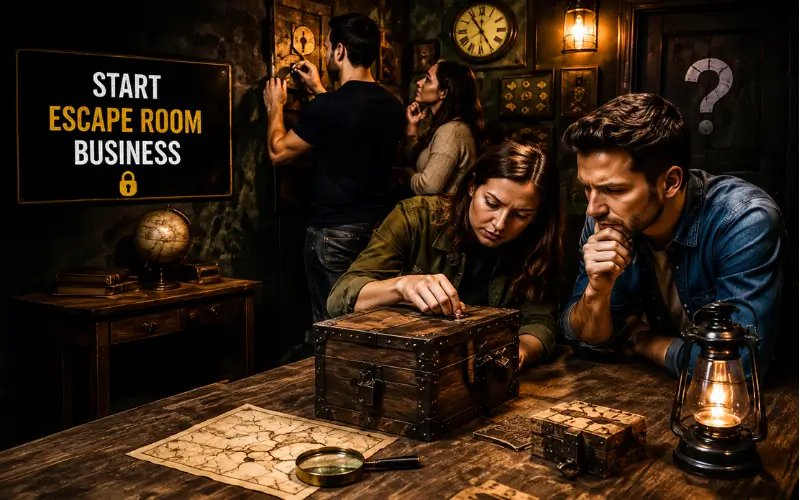
Building a successful escape room enterprise isn’t just about building enjoyable puzzles; it’s also about making sure things are planned well, legality is taken care of, your finances are in check, and you have a good customer experience. Research your local market, find your target market, and select a site that offers sustained demand before you invest. Some of the other topics you’ll need to know include business registration, permits, insurance, and daily business operations (which may differ by state and local laws). A themed escape room that has a good design, working technology, and great service will have more opportunity to get repeat clients and good ratings. Knowing these steps will help you make informed decisions to create a successful entertainment business that you’ll want to consider if you’re looking into escape room business how to start one.
What Is an Escape Room Business?
An escape room business is a live interactive game where groups of people are tasked with solving a puzzle, finding a clue, and accomplishing a mission in a set time, typically 60 minutes.
The current escape rooms have a variety of customers, such as:
- Families
- Friends
- Corporate teams
- Tourists
- Birthday parties
- School groups
- Special events
The majority of businesses are situated in a commercial space with themed rooms, but there is also an escape room that is mobile and/or a pop-up space.
You’re not selling a product; you’re selling an experience. In this way, customer satisfaction, reviews, and repeat visits are essential for long-term success.
Why Escape Rooms Continue to Attract Customers
The combination of entertainment, teamwork, and problem-solving makes escape rooms a popular activity. Another advantage of providing services for multiple market segments is that businesses are not solely dependent on one market segment.
Some of the most popular uses of escape rooms are:
- Team-building events
- Birthday celebrations
- Family outings
- Date nights
- Tourist activities
- Holiday gatherings
- School programs
Contrary to movie theaters or bowling alleys, every escape room has a different tale to tell, and as such, incentivizes customers to come back for additional themes and experiences.
Is Starting an Escape Room Business Right for You?

An escape room owner needs to be creative and business savvy.
Successful owners tend to have:
- Storytelling
- Puzzle design
- Project management
- Customer service
- Marketing
- Problem solving
- Facility management
You need not create all the puzzles; you can find some online. There are many game concepts that are available to purchase, and many businesses hire professional designers or create their own experience in-house.
But you’ll still have to handle schedules, staffing, maintenance, money matters, and customer relations.
Research Your Local Market Before Spending Money
The worst thing that a new homeowner can do is enter a lease agreement without a grasp of what it will demand.
Do your research on your local area before investing.
Start by identifying:
- The current escape room enterprises.
- Their locations
- Customer ratings
- Room themes
- Pricing structure
- Booking availability
- Review trends
Gap analysis can be done through Google Maps and customer reviews. For instance, frequent complaints about confusing clues, outdated rooms, or bad service are clues that may highlight areas where your business can offer something different. Don’t copy your competitors; find unmet customer needs.
Do a neighborhood check-out.
These are some of the questions to ask:
- Will there be a large enough population in the area?
- Do you have colleges or universities?
- Do there seem to be large employers nearby?
- Is tourism beneficial to entertainment providers?
- Is parking available?
- Do there exist complementary attractions in the vicinity?
An excellent escape room in a low-demand area will fare worse than a mediocre escape room in a high-demand area.
Understand Your Target Audience
Many first-time owners assume everyone is their customer.
That’s rarely true.
Instead, identify your primary audience before designing your first room.
| Audience | What They Value |
| Families | Easy-to-medium difficulty, kid-friendly themes |
| Corporate groups | Teamwork, communication, private bookings |
| Tourists | Unique local experiences |
| Friends | Fun, immersive storytelling |
| Experienced players | Challenging puzzles and advanced technology |
Knowing your audience influences everything from room difficulty to marketing campaigns.
Study the Business Model

Escape rooms make most of their income from bookings.
The majority of businesses charge per person, and some private bookings have a flat rate price.
Other revenue streams could be:
- Corporate events
- Birthday party packages
- Merchandise
- Gift cards
- Memberships
- Special seasonal experiences
You should focus on the customer experience in your business model rather than on maximizing occupancy. A business that has gained a good reputation and is known by repeat customers is likely to be more successful than a business that only targets numbers.
Learn the Legal Basics Before Choosing a Building
A lot of business owners begin looking for commercial properties without knowledge of the regulations.
This can lead to costly mistakes.
The U.S. Small Business Administration recommends that before starting your business, you pick your business structure, register your business, get the necessary tax IDs, find out what licensing you may need, open a business bank account, and get insurance. Requirements vary by state and local government.
Additionally, escape rooms might require approvals for:
- Building occupancy
- Fire safety
- Accessibility
- Local zoning
- Commercial construction
As requirements vary by locality, it is important to check with your local building department and fire authority before signing a lease. Depending on the type of facility in which you operate and the classification, you might need to implement special safety rules.
Read Also: How Long Can You Go Without Food
Start With a Business Plan
All successful escape rooms start with a viable business plan, not a construction plan.
A good plan should respond to the following questions:
- Who are your customers?
- What will be your themes?
- What will you do to get the best of your opponent?
- How much does it cost to start your business?
- What will you do to promote the business?
- When will you make a profit? When will you be even?
- What are the potential problems in operations?
The U.S. Small Business Administration recommends developing a business plan before funding or starting operations since it helps to define objectives, project expenses, and expansion plans.
Choose the Right Business Structure
Determine how your business will be structured before opening your doors. It impacts taxes, liability, record keeping, and operations.
There are many different types of business ownership in the United States, including:
| Business Structure | Best For | Key Considerations |
| Sole Proprietorship | Single owner starting small | Easy to form, but personal assets are generally not separated from business liabilities. |
| Partnership | Two or more owners | Partners share responsibilities, profits, and liabilities according to the partnership agreement. |
| Limited Liability Company (LLC) | Most small escape room businesses | Helps separate personal and business liabilities while offering flexible tax treatment. |
| Corporation (S Corp or C Corp) | Businesses planning significant growth or outside investment | More complex administration but may suit larger operations. |
The answer to this question will vary depending on your ownership structure, tax situation, and plans. Always seek the advice of your legal counsel or accountant before deciding.
Register Your Business
After you have decided on a business structure, make sure to complete the necessary registrations before you start your business.
This could be in your state and local jurisdiction:
- Registering your business name
- Filing paperwork to create an LLC or corporation
- Getting an Employer Identification Number (EIN) from the Internal Revenue Service (IRS)
- Exempting from state taxes where applicable.Registration for appropriate state taxes.
- Creating a business bank account
Separation of business and personal finances simplifies accounting and can help retain legal protections for some business structures.
Understand Local Licensing and Permit Requirements
In the U.S., there is no single national license to be obtained for running an escape room business.
Rather, requirements differ from one to another based on:
- State
- County
- City
- Building type
- Occupancy classification
Depending on where you live, you might need one or more of the following:
- General business license
- Certificate of Occupancy
- The Building Permit Application for renovations.
- Fire inspection approval
- Sign permits
- Registration for sales tax purposes (as required)
Additional inspections may also be necessary for some municipalities before opening to the public.
Do not assume requirements, as they vary from state to state and county to county; always check with your local government.
Prioritize Fire Safety and Building Code Compliance
Safety should be considered during the design of a room and not afterwards.
An escape room must have a means of escape in case of an emergency.
Building officials and fire authorities will consider:
- Emergency exits
- Occupancy limits
- Exit signage
- Emergency lighting
- Smoke detection systems
- Fire alarm systems
- Accessibility routes
- Electrical installations
Many places have inspections before they will be approved.
When remodeling an existing business building, use licensed business building code experts.
Make Accessibility Part of Your Design
It is not just good customer service to design an accessible facility; it may be a law requirement.
Depending on the building and applicable laws, elements of accessibility may include:
- Accessible entrances
- Parking spaces
- Door widths
- Restrooms
- Routes around the premises
- Reception area access
Certain puzzle parts may also be created in an accessible style to ensure accessibility for more guests to participate in a comfortable setting.
If you are renovating your property, talk to your architect or contractor early in the planning of the property about what the access needs are.
Choose the Right Location
One of the key factors in long-term success is its location.
If customers cannot easily contact the business, it is an excellent sign that it is in trouble.
When assessing commercial properties, consider:
Visibility
Isolated industrial locations may not have the best exposure, especially if there is a lot of traffic in the commercial area.
Parking
Customers often arrive in groups, and sufficient parking space is a factor to take into account.
Nearby Businesses
Complementary businesses can include:
- Restaurants
- Coffee shops
- Movie theaters
- Family entertainment centers
- Shopping districts
The following nearby attractions will help visitors make your venue part of their outing and encourage them to stay longer.
Demographics
Examine the population around them, such as:
- Household income
- Population growth
- Age distribution
- Tourism activity
- Nearby employers
- Colleges and universities
An ideal location can help you to boost booking possibilities throughout the year.
Lease or Buy?
The majority of first-time owners are leasing commercial space and not buying a property.
Here’s a comparison:
| Option | Advantages | Considerations |
| Lease | Lower upfront investment, greater flexibility, easier expansion | Monthly rent, lease restrictions, landlord approval for renovations |
| Buy | Long-term control, potential property appreciation | Higher initial investment, ongoing property ownership responsibilities |
Before any lease is signed, be sure to ensure that the premises are legally able to run an escape room business. Modifications may be needed to the building,g or zoning changes may be required before opening at some locations.
Design an Experience Guests Will Remember
Your escape room is more than just a puzzle room. It is a good immersive experience which should tell a coherent story from start to finish.
When designing a room, consider:
- Theme
- Narrative
- Puzzle progression
- Lighting
- Sound effects
- Props
- Room flow
- Difficulty level
The best escape rooms are a mix of story and puzzle design; they’re not random puzzles, but puzzles that are tied to the story.
Choose Themes That Appeal to Your Market
Appropriate themes can affect repeat business and customer interest.
Popular categories include:
- Mystery investigations
- Ancient civilizations
- Haunted houses
- Space missions
- Bank heists
- Prison escapes
- Pirate adventures
- Secret laboratories
- Fantasy quests
- Detective stories
Before deciding on a theme, find out if there are other experiences like this in your area. A concept that is unique can help to distinguish your business.
Build or Buy Your Escape Room?
Here are two popular methods:
Build Your Own
Advantages:
- Complete creative control
- Unique customer experience
- Stronger brand identity
Purchase a Licensed Design
Longer development time
- Higher design complexity
- More testing required
- Buy a Licensed Design.
Advantages:
- Faster launch
- Professionally tested puzzles
- Proven gameplay
Challenges:
- Licensing costs
- Less originality
- Other venues may use the same concept
A good number of businesses are able to manage a mix of original rooms and licensed options, where effortless operation is combined with creativity.
Invest in Reliable Technology
Today, escape rooms may also include technology to enhance the experience.
Depending on your concept, you may use:
- Electronic locks
- RFID systems
- Motion sensors
- Automated lighting
- Audio effects
- Video displays
- Control software
- Reservations and bookings.
The technology should be used to improve the experience and to add more challenge to the game, not to take the place of critical puzzle design. Plan for contingencies in case of technical problems, and don’t let a customer’s day be ruined by them.
Test Every Room Before Opening
No matter how well a room is designed, it requires a great deal of testing.
Ask groups of varying experience levels to go and play across the room and give honest feedback.
Evaluate:
- Puzzle clarity
- Difficulty balance
- Timing
- Technical reliability
- Safety
- Overall enjoyment
Go through this feedback and make the experience better before taking customers who pay money. Ongoing testing and updates can also help to maintain the longevity of your rooms.
Estimate Your Escape Room Startup Costs
The first thing entrepreneurs want to know is what the cost of an escape room business is. There is no set startup cost, as costs are dependent on facility size, number of rooms, location, construction, technology, and marketing requirements. The following table is a list of the most common startup costs with estimated costs.
| Expense Category | Estimated Cost (USD) | Description |
| Commercial Lease Deposit | $3,000–$15,000 | Initial lease deposit based on location and property size. |
| Renovation & Construction | $20,000–$100,000+ | Interior build-out, flooring, painting, electrical work, and room construction. |
| Escape Room Design & Props | $10,000–$50,000+ | Custom puzzles, themed décor, furniture, and immersive props. |
| Technology & Equipment | $5,000–$25,000 | Electronic locks, sensors, lighting, audio systems, and control software. |
| Business Registration & Permits | $500–$5,000 | Business registration, licenses, permits, and inspection fees. |
| Insurance | $1,000–$5,000 per year | General liability, commercial property, and other business insurance coverage. |
| Website & Booking Software | $1,500–$8,000 | Professional website, booking system, and payment integration. |
| Marketing & Grand Opening | $2,000–$15,000 | Branding, digital advertising, photography, and launch promotions. |
| Furniture & Office Equipment | $2,000–$10,000 | Reception furniture, computers, POS system, and office supplies. |
| Working Capital | $10,000–$50,000 | Funds to cover payroll, rent, utilities, and other operating expenses. |
Estimated Total Startup Cost: $55,000–$280,000+
Actual cost is based on a variety of factors including location, property condition, labour rates and business size. When estimating your budget, always ask for quotes from local contractors, landlords and suppliers.
Secure Business Financing
If you don’t have enough money to finance the startup, think about your financing options.
Common funding sources are:
- Personal savings
- Bank loans
- SBA-backed loans (through participating lenders)
- Business partners
- Private investors
- After being aware of the risks, consider home equity financing
Each financing option comes with varying requirements, terms, and costs. Shop around to make sure you’re making the best choice.
Purchase Business Insurance
Insurance can help safeguard your business against the unexpected.
Many escape room companies will find these to be policies to consider:
- General liability insurance
- Commercial property insurance
- Business interruption insurance
- If required, workers’ compensation insurance will be paid.
- Commercial umbrella coverage
Cyber liability insurance, if there is any payment information or online booking systems for customers.
Talk to a licensed insurance professional about your business plan to decide what coverages are needed.
Set Competitive Pricing
It’s important to price based on your experience—not just on what other people are doing.
The items that impact pricing are:
- Game length
- Group size
- Room complexity
- Local demand
- Seasonal demand
- Private bookings vs. shared bookings
Numerous outlets also have lower rates or special deals on weekdays or during quiet times.
Regularly check your prices to ensure they are competitive and cover your running costs and development needs.
Select the Right Booking System
It is crucial to have an online reservation system to efficiently process bookings.
Look for features such as:
- Real-time availability
- Secure online payments
- Automated confirmation emails
- Digital waivers
- Gift card support
- Promo code management
- Calendar integration
- Customer reporting
Opt for software that seamlessly integrates with your website and offers an intuitive booking process.
Hire and Train the Right Team
If customer service is lacking, even the best escape room can get bad reviews.
Examples of roles can encompass:
- Game masters
- Front desk staff
- Facility managers
- Maintenance technicians
- Marketing support
- Cleaning staff
Training should cover:
- Customer service
- Safety procedures
- Emergency response
- Puzzle operation
- Technology troubleshooting
- Cleaning and maintenance
- Accessibility awareness
Be encouraging to staff to supervise while not revealing answers too soon. A well-balanced approach will make this a positive experience for guests.
Create a Professional Website
Your website is frequently the initial impression of your business.
A good website has the following features:
- Online booking
- Room descriptions
- Difficulty levels
- Group size information
- Pricing
- Frequently asked questions
- Contact details
- Parking information
- Accessibility information
- Gift card purchases
Make sure your site is mobile-friendly, quick-loading, and has a clear call to action.
Read Also: Burlington Mall Shoppers
Build a Local SEO Strategy
Local search visibility is crucial as many customers look for entertainment options in the vicinity.
To optimise your online presence, do:
- Create and verify your Google Business Profile. Set up your Google Business Profile, then verify it.
- Ensuring that your business information, such as the name, address, and phone number, is identical in each business listing.
- Uploading high-quality photos
- Being professional in the approach to the customer’s review
- Providing current data about a business.
- Here are some tips on how to add location-specific content to your website.
Yelp reviews and Yelp business info can have a positive impact on local search ranking.
Market Your Escape Room Business
Marketing should start well before your grand opening!
A good strategy involves both digital and local efforts.
Consider using:
Social Media
Share:
- Room previews
- Behind-the-scenes construction
- Puzzle teasers
- Customer celebrations
- Seasonal events
Email Marketing
Create an email list to post:
- New rooms
- Holiday promotions
- Special events
- Loyalty rewards
Local Partnerships
Collaborate with:
- Hotels
- Tourism organizations
- Restaurants
- Schools
- Universities
- Corporate offices
- Event planners
These collaborations can expose your company to new audiences.
Public Relations
Have local media or community groups visit your venue before opening.
By having a well-planned launch, awareness is created, and early bookings can be encouraged.
Common Mistakes New Owners Should Avoid
Planning can avert many problems.
Do not make these common errors:
- Opening before testing all rooms.
- Underestimating construction timelines
- Not following local code requirements
- Placing a site where visibility is limited.
- Making excessive investments in decorating and ignoring marketing.
- Making puzzles too difficult and/or inconsistent.
- Failing to maintain rooms and equipment.
- Neglecting customer feedback
- Overlooking accessibility considerations
- The lack of proper insurance coverage.Being underinsured.
By taking the time to understand and avoid these common mistakes, you can enhance customer satisfaction and contribute to your business’s long-term success.
Escape Room Business Models Comparison
| Feature | Independent Escape Room | Franchise Escape Room |
| Initial Investment | Varies based on design and location | May include franchise fees and ongoing royalties |
| Brand Recognition | Built from scratch | Established brand awareness |
| Creative Control | Full control over themes and puzzles | Often follows franchise standards |
| Marketing | Owner-managed | May receive corporate marketing support |
| Training | Self-developed | Usually provided by the franchisor |
| Ongoing Fees | No franchise royalties | Franchise royalties or recurring fees may apply |
| Expansion Flexibility | High | Subject to franchise agreement terms |
When comparing options, consider your budget, desired level of creative control, and long-term business goals.
Grow and Expand Your Escape Room Business
After your first site is successful – think about sustainable growth rather than too fast. Monitor customer feedback, booking trends, and financial performance before investing in additional rooms or locations.
Potential growth areas are:
- Creating new theme rooms to inspire customers to return.
- Providing seasonal or seasonal-only experiences
- Hosting corporate team-building events is an excellent way to enjoy yourself.
- Providing birthday and private party packages.
- Selling branded merchandise
- Offering digital/hybrid escape room experiences
- Validated the need for expansion and then expanded to other cities
It’s better to build one top-notch room per year than to bring multiple concepts to market at the same time.
Measure Business Performance
Successful owners rely on data—not assumptions—to improve operations.
Track key performance indicators (KPIs) such as:
| KPI | Why It Matters |
| Booking rate | Shows customer demand |
| Occupancy rate | Measures room utilization |
| Revenue per booking | Helps evaluate pricing effectiveness |
| Repeat customer rate | Indicates customer satisfaction |
| Customer reviews | Highlights strengths and areas for improvement |
| Marketing conversion rate | Identifies which campaigns generate bookings |
| Average group size | Helps forecast staffing and scheduling |
| Cancellation rate | Reveals booking patterns and potential issues |
Review these metrics regularly to identify trends and make informed business decisions.
Focus on Customer Experience
Great escape rooms make memorable moments that will motivate people to return and recommend to others.
Think about the following tips:
- Make sure there is a clear introduction when visitors arrive.
- Maintain a schedule of games.
- Keep rooms clean and tidy.
- Check puzzle equipment on a daily basis.
- Update clues and props when they become worn out.
- Include a questionnaire at the conclusion of each game to solicit feedback from the customers.
- React to online reviews professionally.
- Offer loyalty rewards or provide early guest access to new rooms for repeat guests.
When a customer has a positive experience, it’s more likely to result in positive word of mouth than in an ad sale.
Conclusion
Creating an escape room business isn’t just about having fun with the puzzle concepts, though; it’s about strategic thinking, legal compliance, financial planning, and customer experience. You can set up a successful escape room business by learning about your neighborhood, finding a good spot, and creating captivating escape room ideas. Good design, marketing, and customer service will help to bring in new customers and help to keep them coming back. Update rooms regularly and listen to customers to keep up to date with your business. An escape room business can be a profitable and sustainable venture in the entertainment industry, so long as it is planned and executed properly.
Read Also: Broker Edge Business Succession Silver Tsunami Guide 2026
Home Depot Charging Parking Fees Explained: Rumour, Reality, and Officia
Lititz Springs Park Events Restrictions Complete Guide to Rules And
Frequently Asked Questions
How much money do I need to start an escape room business?
The start-up expenses depend on the location and property size, construction, technology,y and room design. Before investing, make an extensive budget that includes quotes from nearby contractors and suppliers.
Is an escape room business profitable?
Yes, an escape room business can be profitable if you have regular reservations, run the business with careful budgeting, and offer an enjoyable experience that will make customers want to return.
Do I need special licenses to open an escape room?
Yes. Requirements will differ by state and city, but you need to register your business, obtain local permits, fire safety approval, al and a Certificate of Occupancy before opening.
How many escape rooms should I open initially?
The average new owner begins by getting one to three escape rooms. This will help keep start-up expenses under control and enable the enterprise to expand according to the demand of the customers.
Should I build my own puzzles or buy them?
Both of these choices are good. Custom puzzles offer a unique experience, and licensed escape room designs can help save time on development and offer already tested gameplay.
What is the best location for an escape room business?
Find a spot that is easily seen, easily parked, has nearby restaurants and attractions, and is convenient for your target audience. Check with local zoning regulations before entering into a lease agreement.
How do I attract more customers?
Create a professional website, optimize your Google Business Profile, leverage local SEO, engage with social media, and get happy customers to give positive online reviews.