






Jozi Place: History, Location and What the Records Reveal
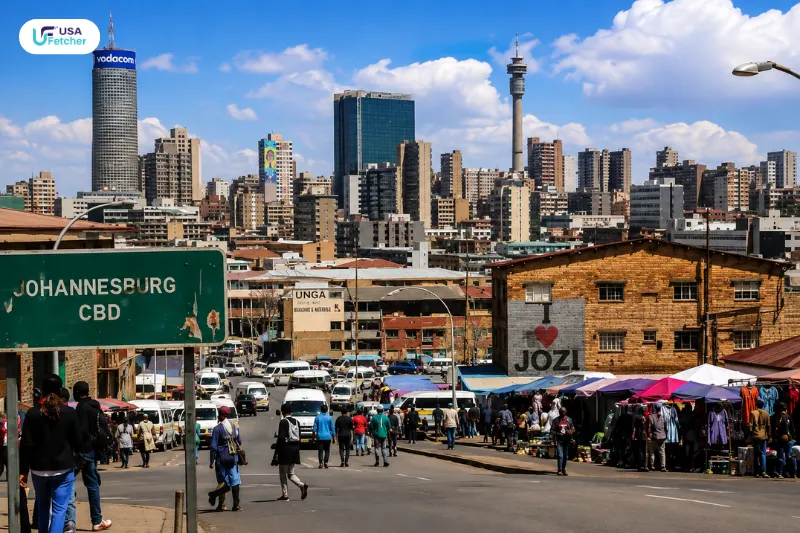
Johannesburg is famous as Jozi, Joburg, and The City of Gold, but its name can be confusing, particularly the term Jozi Place, as it doesn’t have the same historical background as other popular places to visit in Johannesburg or the districts. The best authenticated record locates Jozi Place as a tavern in the inner city of Johannesburg, near the corner of Von Weilligh Street and Frederick Street. The reference has been published in a Gauteng Provincial Gazette on 5 March 2008.
The historical record is significant as many pages online today use the term “Jozi Place” to refer to Johannesburg in general. For instance, the official Gauteng tourism website calls Johannesburg “Jozi”, and Gauteng’s City of Johannesburg defines the inner city as the built-up area that developed around the original mining camps set up in the late 19th century.
Importance of this difference in terms of the specific name search. There is some evidence to support a historical establishment known as Jozi Place, but I have no reliable current source to confirm that the tavern is still in operation as Jozi Place in 2026. It is also not well documented enough to prove it as a significant modern tourist destination.
Jozi Place in the Historical Record
The most obvious source is the Gauteng Provincial Gazette No 50 of 05 March 2008. The gazette announced liquor premises nearby in a notice for liquor-licensing applications for premises at the Mind Your Head Art Hub. One of those was Jozi Place, a tavern, located at the corner of Von Weilligh and Frederick Streets, Johannesburg.
This is more compelling than the information found in modern directory listings or copied travel pages, as it is in an official provincial publication directly related to liquor licensing. The gazette does more than just name the establishment; it describes it by its type and gives the street intersection.
What the 2008 record confirms
The historical document establishes several useful details:
| Detail | Verified information |
| Establishment name | Jozi Place |
| Type | Tavern |
| City | Johannesburg |
| Street location | Corner of Von Weilligh Street and Frederick Street |
| Source date | 5 March 2008 |
| Source | Gauteng Provincial Gazette |
The final one is particularly significant. A government record from 2008 shows it had been documented at that time, but not that the business had continued to operate for the next 18 years.
The Location Around Von Weilligh Street
The site designation of the tavern implies it is part of the historical context of the inner city of Johannesburg. Despite the go-go attitude of modern Von Weilligh Street, the street has existed for far more than 100 years and has been a part of the urban fabric of Johannesburg for that long.
The Catholic Archdiocese of Johannesburg has historical material on significant early development around Von Weilligh Street. An earlier church was mentioned at the corner of Main and Von Weilligh Streets in the late 19th century in the history of the Cathedral of Christ the King. This is a reflection of the street’s long-standing importance during the early boom of Johannesburg’s urban development.
National Archives of South Africa also have historical records that mention Von Weilligh Street in relation to the history of the Methodist Church in Johannesburg. One archival register from 1912-1925 documents religious activity related to Regent’s Park Mission and other sites in Johannesburg.
These records do not make a direct link between the tavern and the earlier institutions. Rather, they offer valuable historical background to the street.
Von Weilligh Street and Johannesburg’s changing urban landscape
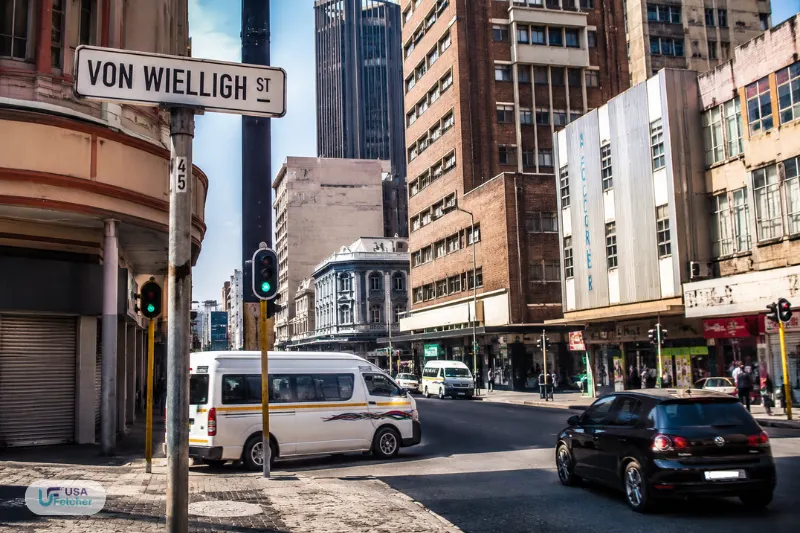
The street has also been linked to the commercial areas and the eastern side of the CBD, Johannesburg. A history of the city’s Fashion District estimated the size of the district to be roughly 20 blocks in size between Market, End, Kerk and Von Weilligh Streets. This association with clothing and fashion businesses took deep root in the area, and a few businesses could remember the involvement in the area from the 1940s.
The tavern, as recorded here, fits within the context of the growth and evolution of the inner city in Johannesburg, and is not primarily viewed in isolation.
What Kind of Place Was It?
According to the official 2008 source, Jozi Place is specifically a tavern. It is important because a tavern does not necessarily match the modern restaurant, cocktail lounge, hotel bar, or tourist attraction.
There are no reviews, prices, capacity, history of ownership, hours, or a menu available for the government record. The information should therefore not be given as an absolute fact.
The record does, however, indicate that the business is part of a group of liquor-related businesses in the vicinity. As well as Jozi Place, the same gazette entry lists C to C Liquor Market, The Foxx Den, Hyper Liquor Cellars and The Miller Way.
This provides a snapshot of the commercial environment at the time of recording in 2008: there were a number of businesses associated with the liquor and hospitality sector.
The 2008 Gauteng Gazette Entry
One of the most helpful dates that will be provided by the government record is the date of the record.
A chain of liquor-related notices was published in the Gauteng Provincial Gazette on 5 March 2008 for the City of Johannesburg and other locations. A single Johannesburg notice contained the facilities that were located in the proximity of the applicant’s premises. The entry noted Jozi Place as a tavern at Von Weilligh corner Frederick Street.
The notice also named the applicant in that proceeding as Blakbox Imprint, the premises being Mind Your Head Art Hub, 19 corner Smal and Anderson Street, Johannesburg. The notice of nearby establishments did not include Jozi Place as the applicant, but listed it as an establishment.
That’s why the gazette will not state that Blakbox Imprint was the owner of Jozi Place, as this is a common mistake in research. It has merely mentioned that the tavern is a nearby establishment.
Why the Name “Jozi” Matters
The restaurant’s name “Jozi” is not special to the restaurant itself. It is a common nickname for Johannesburg.
The official Gauteng tourism authority references “Johannesburg – Jozi” in its destination marketing product and talks about Johannesburg as being the megacity of South Africa. Johannesburg is also referred to as Joburg and Jozi in the local vernacular, and is included in this list of the South African Government’s names.
This means that the term “Jozi Place” can often be confused with more general information about the city of Johannesburg.
This is why it’s so important to make a distinction between two ideas in an accurate article.
- Jozi as a nickname for Johannesburg
- Jozi Place as a historical establishment documented in Johannesburg
It would be misleading to equate the two and come across the impression that Jozi Place is the name of the whole of Johannesburg.
Johannesburg’s Inner-City Setting
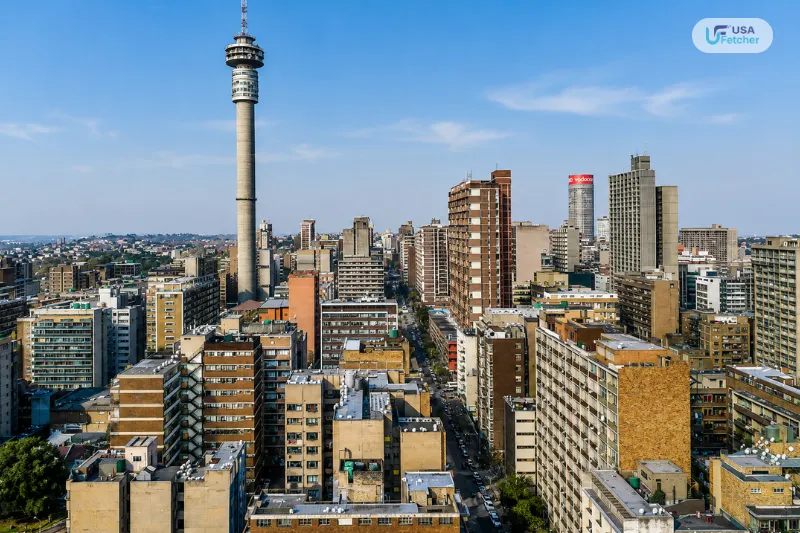
The historical context is also important. The City of Johannesburg uses the term Region F to refer to part of the inner city which contains the original mining camps from which the City of Gold came about in the late 19th century. The CBD of Johannesburg gradually developed into a built-up area of offices, residences and commercial structures.
Subsequent significant changes occurred in the inner city. The City of Johannesburg reports that the process of business investment began to be spread out to nodes during the 1980s and 1990s, resulting in a decline in some parts of the CBD and surrounding areas. The area continued to be a vital trade, commerce and cultural hub.
The account of this history is useful for the 2008 record. The urban transition that affected commercial streets, nightlife, transport, and residential areas, in which a business was documented in the inner city during that time, is a much larger urban change.
Nearby Inner-City Places Worth Knowing
While there is no clear evidence that Jozi Place is a tourist attraction, the inner city of Johannesburg is home to a number of cultural and historical sites.
Central Johannesburg attractions include the Gauteng tourism authority’s spotlight on the Bassline, the Newtown Cultural Precinct, the Market Theatre and Museum Africa. It also designates Constitution Hill as a significant historical landmark, which features the Old Fort Prison Complex and the Constitutional Court of South Africa.
Further away in the city, there are other types of places. Some areas like Sandton and Rosebank feature in Johannesburg’s tourism marketing, and some cultural heritage sites like the Apartheid Museum, Soweto and Maboneng have been a focus of travel reporting.
The sites are not Jozi Place sites but sites to be experienced in the wider Johannesburg region.
The Changing Face of Johannesburg
The inner city of Johannesburg has experienced multiple instances of decline, development and community revitalization.
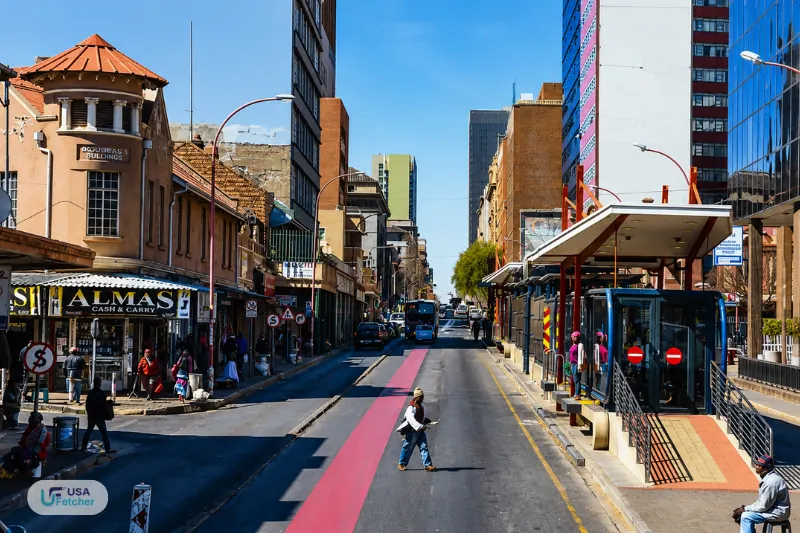
The City of Johannesburg is still funding development on public spaces in its inner city. The Johannesburg Development Agency, for instance, reported that upgrades on Goud Street, such as wider sidewalks, pedestrian lights and landscaping, and various other public-environment improvements, were completed. The project was a part of the investment in the Gandhi Square East Precinct.
The City says that Gandhi Square is a tourist attraction and is a “vibrant, urban hub” with buses, taxis and the Rea Vaya Bus Rapid Transit system.
Meanwhile, there are specific projects like Jozi My Jozi, which is dedicated to the revitalisation of the inner city of Johannesburg by working together with businesses, residents and other organisations. It is said to have the following goals: improve safety, enhance community health, tourism, arts and culture, and sustainable urban development.
The larger context story is important: Johannesburg’s inner city is not a static place, and businesses from older records might not operate today under the same names.
What Is Known About Its Current Status?
Here, it is all important to create proper sourcing.
The finest proof of Jozi Place is found in the Gauteng Provincial Gazette of 5 March 2008. There is no authoritative source that confirms, at this time, that the tavern is still open in 2026. I can’t verify an up-to-date address, hours, phone, website, menu, admission policy, prices, ownership, or current customer rating beyond the street intersection where the establishment is located, its historical dates of operation, and its historical phone number.
A few modern web pages are using the name “Jozi Place” as if it were a generic term for Johannesburg. It is mentioned in one of the pages published in 2026 as an urban representation of Johannesburg, but there is no evidence in the official sources consulted to substantiate this, and therefore it should not be regarded as an official district or attraction of the city of Johannesburg.
The difference between verified historical evidence and unverified modern claims should be maintained for reliable publishing.
Jozi Place and Johannesburg’s Broader Identity
It is worth investigating the name as it is an intersection of Johannesburg’s commercial and cultural name.
Johannesburg is the country’s biggest city and is an important economic hub. Johannesburg, Joburg, and Jozi are all used to refer to Johannesburg, as is the name Gauteng, which is used by the tourism authority that covers the province.
Also, Reuters says that Johannesburg is South Africa’s economic hub and that it dates back to the Gold Rush in the 19th century. The diversity of its business quarters, cultural neighbourhoods, food, music and historical sights are also highlighted.
This wider identity also helps to account for the challenges of distinguishing businesses with “Jozi” in their name from the city itself. Specific details about the street and historical records are therefore very useful when identifying a specific establishment.
Practical Information for Researchers and Visitors
The 2008 government record should be considered the main reference point for establishing anyone’s history and not just directory listings.
The best information that’s on the table, right now:
| Information | Research finding |
| Historical name | Jozi Place |
| Business category | Tavern |
| Historical city | Johannesburg |
| Recorded intersection | Von Weilligh Street & Frederick Street |
| Documentary evidence | Gauteng Provincial Gazette |
| Publication date | 5 March 2008 |
This is especially crucial for location-based content, as the information about a business can shift over time.
Safety and Travel Context in Johannesburg
Travel information for Johannesburg should also be separated from the general travel information for the city, the historical establishment.
Reuters recommends that visitors to the inner city be lightweight, keep valuables to themselves and be alert. The Times also warns visitors to be aware of their surroundings and not to walk at night in suitable areas.
Here are a few tips on travelling to Johannesburg: They are not considered to be evidence of the safety performance of the historical tavern as an establishment, as there is no reliable safety record available yet.
If you are planning to visit the area for a business trip today, calling about the current site of the business is better than looking for the 2008 information, which may not have been accurate.
Why Reliable Sources Matter for This Location
The fact that so many online claims have been made about this name is a good example of a problem with location content: When evidence is lost, it can appear that the facts are established.
In this instance, a historical reference is provided in the official 2008 gazette. It specifies the name, business type, and street intersection. The other credible sources contribute to establishing the historical significance of the streets around it and the evolution of the inner city of Johannesburg.
The fact that those sources don’t establish anything else is also important. They don’t demonstrate that it is still open, that it has become a prime tourist destination, or that it is accurately described online these days.
An article written based on research should then keep those boundaries and not leave out information with assumptions.
Final Takeaway
The evidence made available to the court is best interpreted as a Johannesburg tavern historically documented in the corner of Von Weilligh Street and Frederick Street in the Gauteng Provincial Gazette on 5 March 2008.
The site is in an older and historically significant area of Johannesburg, defined by the city’s mining heritage, commercial development and subsequent industrial growth and ongoing inner city redevelopment. The historical sources corroborate the significance of Von Weilligh Street and the broader CBD, with ongoing city initiatives reflecting the ongoing transformation of the urban environment.
The bottom line for readers is that everything in the history books is clear, but the status of the business is not. I don’t know if the tavern is still open in 2026. If there is no evidence to support it, then the presentation of hours, prices, contact, or attractions as facts would be an exaggeration.
Frequently Asked Questions
Is Jozi Place in Johannesburg?
Yes. The 2008 Gauteng Provincial Gazette lists Jozi Place as a tavern in the city of Johannesburg and states its location as ‘At the corner of Von Weilligh and Frederick Streets’.
What type of establishment was Jozi Place?
According to the official gazette, it’s a tavern. There is not enough information to make a restaurant, night club, hotel, or tourist attraction.
Where was Jozi Place located?
It has been recorded as being at the corner of Von Weilligh Street and Frederick Street in Johannesburg. This information is exactly as printed in the Gauteng Provincial Gazette on 5 March 2008.
Is Jozi Place still open?
It is currently operating, but this cannot be confirmed from the reliable sources found. The best direct evidence for the opening dates is from 2008; therefore, it is not advisable to assume opening dates or business activity in later years.
Is Jozi another name for Johannesburg?
Yes. “Jozi” is a commonly used name for Johannesburg. When talking about the city, both Gauteng tourism literature and the South African government refer to Jozi as well as Johannesburg and Joburg.