






National Airports Corporation: A Complete Guide to PNG’s Airport Network, Role, Services and Future

Papua New Guinea’s aviation network is essential for connecting a geographically dispersed country where mountains, islands and limited road infrastructure can make air travel the most practical way to move people and goods. At the center of this network is National Airports Corporation, the state-owned organization responsible for operating and managing 22 national airports across Papua New Guinea.
The organisation is much more than a terminal manager. It is responsible for airport development and upkeep, aviation security, rescue and fire-fighting, infrastructure management and contributing to the future sustainability of the nation’s airport system. It also collaborates with the Government, development partners, airlines, contractors and other aviation stakeholders to improve airport infrastructure and passenger services.
When travelling, or when working for airlines, businesses, job seekers, or studying the aviation industry in Papua New Guinea, knowledge of NAC is useful background to understanding how the country’s airports operate and where the country’s aviation industry is going.
What Is National Airports Corporation?
The Papua New Guinea government’s aviation body is called the National Airports Corporation (NAC). It has been incorporated since 2000 under the Companies Act 1997 (as amended) as a result of the implementation of the Civil Aviation Act 2000 (as amended). It is not an airline or aviation regulator, but rather the national airport operator of the country.
NAC is the owner and operator of a total of 22 national airports in Papua New Guinea’s main provincial centres. These airports are important for economic and social development as they link communities, businesses, tourists, government services and other parts of the country, according to official information.
It is important to note that it is different from an airport operator and an airline. The airport is managed by NAC and associated services and is operated by airlines and sells air travel. In the same way, the government regulatory bodies, such as the Civil Aviation Safety Authority of Papua New Guinea (CASA PNG), play a role in aviation regulation and safety oversight. NAC manages its airports according to the relevant national aviation regulations and international standards.
Who Owns the Corporation?
NAC is owned by the people of PNG through trustee shareholding with the Minister for Treasury and Finance and the Minister for Civil Aviation (on behalf of the PNG government). This ownership is a testament to the corporation’s role as a public aviation corporation, not a privately owned airport company.
Its public management is also the reason for its close link with the national transportation and economic-development goals in general. Airports do not just exist as commercial enterprises; they also play a vital role in provincial connectivity, tourism, trade, government operations and access to services.
Sustainability is a key element of the corporation’s business strategy, as it is defined by the airport. It integrates financial viability with the capacity for safe operations, quality infrastructure and properly qualified human resources in the long term.
How Many Airports Does NAC Operate?
Today, the organisation is running 22 national airports across Papua New Guinea. The network consists of the nation’s largest international airport at Port Moresby and airports at provincial and regional centres.
These are the 22 airports shown in the table, compiled by NAC:
- Port Moresby — Jacksons International Airport
- Nadzab Airport
- Mount Hagen — Kagamuga Airport
- Tokua Airport
- Madang Airport
- Wewak Airport
- Gurney Airport
- Hoskins Airport
- Goroka Airport
- Kavieng Airport
- Buka Airport
- Momote Airport
- Vanimo Airport
- Tari Airport
- Mendi Airport
- Kundiawa Airport
- Wapenamanda Airport
- Kerema Airport
- Kiunga Airport
- Daru Airport
- Girua Airport
- Aropa Airport
This network provides NAC with a wide reach. Airports vary widely in size, infrastructure, aircraft capacity, passenger volumes and services offered and the corporation must operate facilities that have varying operating needs.
What Does NAC Do?
As a statutory corporation, the corporation is involved in a host of airport-related functions. This covers the enhancement, development, operation and management of the country’s airports. The bill also gives NAC the authority to engage in airport-related activities and to be involved in agreements with airport authorities and others.
Its main duty is to preserve the infrastructure of the airport. This can cover areas such as runways, terminal facilities, airfield systems, utilities, buildings and more, all of which are necessary to ensure an airport operates safely and reliably.
NAC also offers aviation security and aviation rescue and firefighting services. It is important to note that airport functions are essential to the operation of an airport; in addition to passenger facilities, airports need to have the right safety and emergency response measures.
Its duties include land that is connected to airports as well. The corporation may undertake development of surplus land at the airport for the airport’s and other approved purposes, providing opportunities for commercial use and for long-term financial sustainability of the airport’s assets.
Airport Safety and International Standards
One of NAC’s primary concerns is airport safety. The airports must meet the requirements of the Papua New Guinea Civil Aviation Rules and international standards and recommended practices of the International Civil Aviation Organization (ICAO).
This regulatory framework impacts almost all aspects of airport operations. Infrastructure should facilitate safe aircraft and passenger operations, including runway conditions, airfield lighting, emergency services, security procedures, terminal operations and more.
NAC also has a safety-management approach focusing on hazard identification, operational risk management, safety performance monitoring and appropriate skills and training of personnel.
The airports operated by the corporation are classified on the basis of facilities available and type of aircraft which it can service. NAC has a published classification system which has three classifications, A, B and C.
Class A Airports
Class A facilities are those that have more comprehensive infrastructure, including air traffic control, jet operations, aviation rescue and firefighting, aviation security, terminal facilities, utilities and airfield lighting.
Within this category, NAC recognises the following locations: Port Moresby, Nadzab, Mount Hagen, Tokua, Madang and Goroka.
Class B Airports
Class B airports accommodate jet traffic and contain terminal and related facilities like power facilities, water, fire-water, sewerage and airfield lighting.
Vanimo, Wewak, Momote, Kavieng, Buka, Hoskins, Gurney, Kieta, or Girua are listed as Class B airports.
Class C Airports
Class C airports feature facilities suitable for smaller aircraft, such as Dash 8 and regular passenger transport services and terminal facilities.
On the NAC aerodrome classification page, these aerodromes are listed under this category: Kiunga, Daru, Kerema, Mendi, Tari, Chimbu, Wapenamanda.
Jacksons International Airport and NAC
Jacksons International Airport (JIA), Port Moresby, is a key airport to the PNG international trade sector as the Flagship International Airport for PNG. Jacksons is the country’s main link to the outside world and Port Moresby is part of NAC’s Class A airport group.
The airport is not only significant for international travellers. It is also a significant component of the domestic aviation network, linking Port Moresby with other places in the country.
The corporation is aware of the importance of the strategic position of Jacksons as well as its infrastructure, power systems, passenger facilities, security and operational reliability. In 2026, NAC announced an early market engagement for the power-system upgrade and works at Jacksons under the second phase of the Civil Aviation Development Investment Project.
Nadzab Airport Development
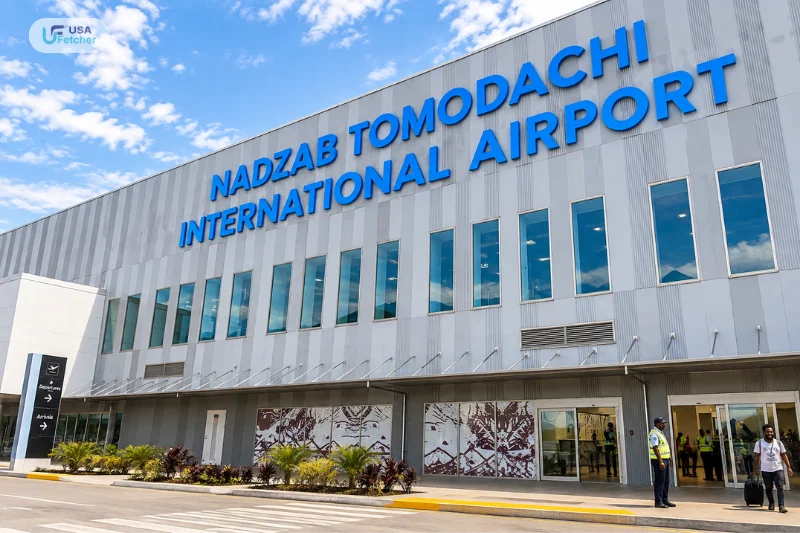
Another major airport in NAC’s network, Nadzab has been a major redevelopment focus. NAC sees the redevelopment of Nadzab Airport to Nadzab Tomodachi International Airport as one of the landmark projects that will help to modernise PNG’s aviation infrastructure.
The project illustrates that airport development can be more than merely routine maintenance. Infrastructure, modern terminals, improved passenger facilities and improved operational capabilities can boost an airport’s potential in the fields of tourism, trade, regional connectivity and economic development.
NAC has an engineering division that is responsible for planning, design, maintenance and project management of airport infrastructure. The division also manages development projects related to development programmes like CADIP and the development of the Nadzab area under the support of the Japan International Cooperation Agency (JICA).
Airport Development Projects
One major aspect of NAC’s future strategy will be to upgrade the airport facilities in its network. Runway Improvements, Terminal infrastructure, Electrical systems, Safety equipment, Security facilities and other operational assets are all forms of development work.
The Civil Aviation Development Investment Project (CADIP) is one of the flagship projects related to this modernization project. NAC is in the process of developing aviation infrastructure projects in conjunction with development partners such as the Asian Development Bank (ADB).
In 2026, NAC was also interested in project engineering for the rehabilitation of the rural airstrips of Finschhafen, Hayfield and Jacquinot Bay within CADIP II. The corporation said that the project would involve procurement assistance, construction monitoring, stakeholder engagement, costing and reporting.
This is important, as not all airstrips in PNG are part of the basic 22-airport network of NAC. The government talks have included the fact that the rural airstrips are not part of NAC’s jurisdiction, but rather the Rural Airstrip Agency.
Why Airport Infrastructure Matters to Papua New Guinea
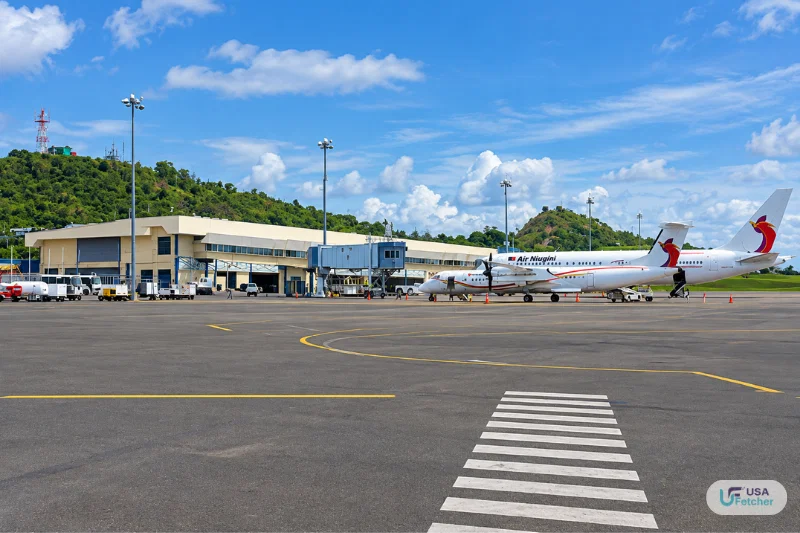
The geography of Papua New Guinea’s location is especially important for the valuable infrastructure supporting reliable aviation. The country is composed of a continental part and many islands and undeveloped land may hinder land travel in many areas.
A successful airport network can also facilitate more than tourism. It can be used to transport employees and goods for business, for communities to communicate with key population centres and for access to government services, health, education and other services.
NAC cannot really be more descriptive than it is on its own: their airports are crucial enablers of socioeconomic development. Its stated mission is to deliver safe and reliable airport services that contribute towards Papua New Guinea’s overall development.
Sustainability is also an economic factor in the value of airports. If an airport is unable to provide reliable service to its infrastructure, it may ultimately be difficult to maintain consistent service. Therefore, NAC has made effective resource management, quality of infrastructure, capacity building of the workforce and financial sustainability mutually reinforcing priorities.
NAC’s Workforce and Career Opportunities
The broad range of professional and technical skills needed to run 22 airports. NAC states that it has more than 700 employees working across its airport network.
Professional opportunities are not limited to the traditional roles that are in the direct service of customers in the airport. The corporation has advertised jobs related to aviation security, electrical systems, maintenance, terminal operations, engineering, customer service and other airport duties.
It has an engineering division that hosts an industrial training and graduate pathway. University students and graduates have the opportunity to experience airport infrastructure, engineering drawings, AutoCAD and various technical design computer software and to get practical experience in the aviation industry.
The official NAC recruitment page and careers page are the best and most reliable point of contact for prospective applicants, as job opportunities, closing dates and job requirements may change.
NAC’s Role in Airport Commercial Activity
There are increasing expectations of value generation beyond passenger transportation at modern airports. NAC aims to build a business model that will leverage landside opportunities and enhance the airport passenger experience to form sustainable cities at the airport.
This can provide commercial tenants, airport concessions, service providers and other businesses within or surrounding airport facilities with opportunities.
In addition, NAC’s engineering and project-management information includes applications for concession-related activities and airport operations. These facilities enable the corporation to collaborate with outsiders while keeping safety, compliance and operational mandates for the airport.
Recent Governance and Financial Developments
The facilities and equipment at the airport are just as important as the other processes of operating a state-owned aviation enterprise. Good financial reporting and governance are also necessary to ensure trust in the government stakeholders and development partners.
In 2026, NAC also reported some progress in resolving a backlog of audited financial reports. According to the corporation, its 2021 financial report is completed and signed by the Auditor General’s Office and the 2022 and 2023 audits are done and in the process of being signed by the AGA. The 2024 audit was ongoing and the 2025 audit would be completed before the end of 2026, NAC said.
The corporation made the financial reporting aspect of the company more meaningful and associated it with statutory compliance and better governance. This is especially true of an organisation that is engaged in significant public infrastructure development and is in partnership with international development institutions.
Current Infrastructure Priorities
The 2026 updates make it clear that airport development is still a priority for NAC. Some of the recent changes announced include runway work at Mount Hagen’s Kagamuga Airport, restrictions relating to the upgrade of Hoskins Airport and infrastructure projects at other airports.
The corporation has also been striving to make airports more accommodating to larger aircraft at airports. In 2025, a NAC statement outlined the infrastructure projects at airports at Mount Hagen, Tokua, Hoskins, Wewak, Kieta, Vanimo, Goroka, Madang and Buka with various timelines and project statuses.
As project schedules and operational limitations may change, travelers and aviation companies should use NAC’s current notices, not previous project announcements, for scheduling flights and airport operations.
Is NAC an Airline?
No. NAC is NOT an airline; it’s an airport operator.
It’s in charge of running and maintaining the airport and its services. Those airports are used by airlines to provide passenger and cargo services and regulatory organizations oversee aviation safety and regulatory compliance.
This is relevant when searching for flights, flight times, or airline policies. NAC is not responsible for setting airline ticket prices. It is primarily involved in the responsibilities of airport infrastructure, operations, safety, security and related airport services.
What Makes NAC Important?
The significance of NAC is due to the magnitude and the scope of its duties. Operating 22 airports is comparable to having just a single large airport.
The organization links the international aviation and domestic/regional transport systems. Meanwhile, its infrastructure projects have the potential to impact tourism, trade, jobs, access to major centers and interprovincial connectivity.
Its future course also means that Papua New Guinea is moving towards seeing airports as more than just facilities for aviation; it is seeing them as broader economic assets. The focus on sustainable airport cities, modern infrastructure, passenger experience and partnerships indicates that the airport network is being planned for long-term commercial benefits.
Final Thoughts
National Airports Corporation is the very heart of PNG’s civil aviation system. Its duties include the infrastructure and services which enable the national airport network to be safe and reliable, ranging from operating Jacksons International Airport to managing regional airports throughout the country.
It is also becoming more influential in its role outside of the day-to-day operations of the airport. The corporation’s overall direction includes infrastructure modernization, CADIP projects, Nadzab redevelopment, airport sustainability, commercial opportunities, workforce development and improved governance.
To access updated information on services, vacancies, projects and airport operations for their use, passengers, businesses, the aviation industry and investors will seek to follow the official announcements made by NAC. The corporation will continue to play a pivotal role in the nation’s aviation infrastructure and thus its transport connections of Papua New Guinea’s communities to the country and to overseas opportunities.
Must Read: EasyJet Flight U2238 Emergency Landing Newcastle: Full Incident Explained
Brickell Metrorail Station: Routes, Fares, Schedule & Visitor Guide
Tampa Bus Station Location, Greyhound, Parking And Hotels Guide 2026
Frequently Asked Questions
What is National Airports Corporation?
A public entity operating the airport under the Civil Aviation Act 2000 and incorporated in 2009. It owns 22 national airports throughout the country and operates them.
How many airports does NAC operate?
NAC has 22 airports around the country, including Jacksons International Airport in Port Moresby and airports in important provincial centres.
Is NAC a government organization?
Yes. NAC is a government-owned aviation enterprise, owned by the people of Papua New Guinea, via trustee shareholding.
What services does NAC provide?
It is responsible for the operation and management of the airport, infrastructure development and maintenance, aviation security and aviation rescue and firefighting services.
Does NAC operate rural airstrips?
Not all rural airstrips in PNG are covered by NAC. The 22 government-certified national airports are different from rural airstrips that are managed by the Rural Airstrip Agency, which is under the government. There are 22 government-certified national airports, as opposed to rural airstrips under the management of the Rural Airstrip Agency, also under the government.
Where can people find NAC jobs?
All the current vacancies are advertised on the official Recruitment and Tenders page of NAC. Current openings have been in the areas of maintenance, electrical, aviation security, customer service and other airport-related jobs.