






Canal Street New Orleans: Attractions, Shopping, Dining & Travel Guide
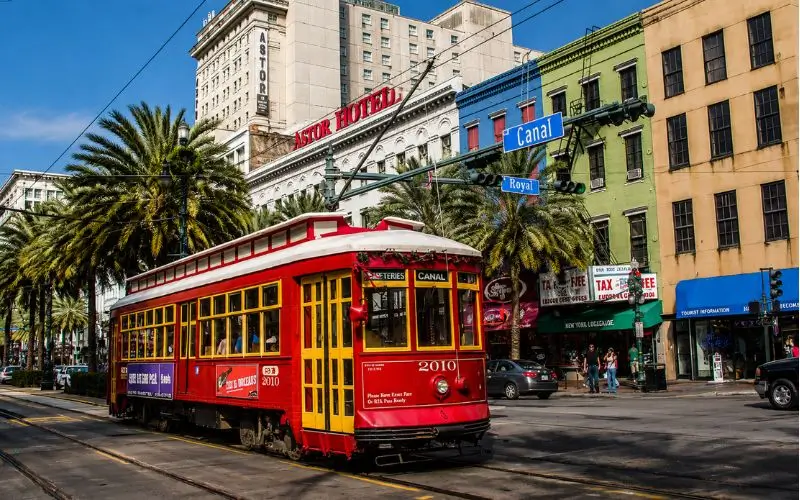
Canal Street New Orleans is an historic street in the center of New Orleans, which divides the French Quarter from the Central Business District. It runs from the Mississippi River to the city’s historic cemeteries and is a major transportation corridor on which the RTA streetcar runs. Tourists are drawn to its historic theaters, shopping, hotels, restaurants, and convenient location in proximity to attractions such as the French Quarter and Canal Place. Located right in the heart of the city, Canal Street is one of the top places to begin any New Orleans walking or public transportation tour.
Canal Street New Orleans: Basic Information
| Category | Details |
| Official Name | Canal Street |
| Location | Downtown New Orleans, Louisiana, USA |
| Connects | Mississippi River to the Historic Cemeteries |
| Separates | French Quarter and Central Business District (CBD) |
| Known For | Historic streetcars, shopping, hotels, restaurants, and entertainment |
| Streetcar Service | RTA Canal Street Streetcar |
| Single Ride Fare | $1.25 |
| 1-Day Jazzy Pass | $3.00 |
| Best Time to Visit | Spring and Fall |
| Family Friendly | Yes |
| Accessibility | ADA-accessible streetcars and many public facilities |
| Popular Attractions | Canal Place, Saenger Theatre, Jackson Square, Audubon Aquarium |
| Nearby Neighborhood | French Quarter |
| Parking | Public garages, hotel parking, and metered street parking |
| Popular Activities | Sightseeing, shopping, dining, theater shows, and streetcar rides |
| Recommended Visit Duration | 2–4 hours or a full day when exploring nearby attractions |
Why Canal Street Is One of New Orleans’ Most Important Streets
Since the early 1800s, Canal Street has been an important part of New Orleans history. Although it sounds like the name, there was never a canal constructed there. The unusually broad street had been designed as a canal, but the plan was never put into practice. In its place, the wide median, which locals call the “neutral ground,” became a hallmark of the city’s urban design. In the minds of New Orleans residents, “neutral ground” is still the term for street medians across the city.
Canal Street always served as a boundary between the older French and Spanish half of the city (the French Quarter) and the growing American Sector following the Louisiana Purchase. This special position influenced the city’s business development during the 19th and 20th centuries.
Where Is Canal Street Located?
Canal Street stretches north from the Mississippi River, near the bottom of Canal Street, across downtown New Orleans to the historic above-ground cemeteries. It also has intersections with several significant districts such as:
- The French Quarter
- Main business district (CBD)
- Warehouse District
- Riverfront area
- Mid-City (via the Canal Streetcar)
It’s an easy place to start exploring New Orleans on foot or public transit.
What Makes Canal Street Famous?
Canal Street has become one of the city’s iconic places for a variety of reasons.
Historic Shopping District
In the late 19th and large part of the 20th century, Canal Street became New Orleans’ main shopping area. The avenue was lined by iconic department stores like Maison Blanche, D.H. Holmes, Krauss’ and Godchaux’s. Many of those historic stores are gone, but Canal Street is a significant retail corridor that offers luxury shopping, local businesses, and national brands.
Historic Streetcars
The Canal Street streetcar line is one of the street’s main attractions. The red streetcars run down Canal Street and provide access to the hotels in the city center, the French Quarter, the cemeteries, and other areas. There is also a transfer to the iconic streetcar service of St. Charles Avenue, which is one of the oldest in the world still in service.
Mardi Gras Parades
Canal Street is one of the city’s well-known routes for the Mardi Gras parade. The avenue is packed with people during the carnival season, watching the floats and marching bands, and enjoying the traditional New Orleans festivities. Canal Street is also home to holiday parades and seasonal light displays in December.
Top Attractions Along Canal Street
Many attractions along Canal Street can make it easy to spend a day exploring.
The Shops at Canal Place
The Shops at Canal Place, located close to the Mississippi River, offers a variety of luxury shops, restaurants, and entertainment. Canal Street’s long tradition as one of New Orleans’ main shopping sites continues at the shopping center.
Saenger Theatre
The Saenger Theatre was opened in 1927 and is a lovely 1920s relic that now hosts Broadway shows, concerts, comedy, and other live events throughout the year. It is still one of the city’s top attractions.
Joy Theater and Orpheum Theater
Canal Street has earned its reputation as a cultural destination, with historic venues regularly hosting concerts, touring productions, comedy shows, and special events.
Audubon Insectarium
The Audubon Insectarium is one of the few museums focused solely on insects in the world. It is operated by the Audubon Nature Institute and has interactive exhibits for both adults and children.
Canal Street vs. Bourbon Street
Many of the first-timers ask themselves if they should spend more time at Canal Street or at Bourbon Street.
| Feature | Canal Street | Bourbon Street |
| Primary atmosphere | Shopping, sightseeing, hotels, theaters | Nightlife, bars, live music |
| Family-friendly | Yes | Limited, especially at night |
| Public transportation | Excellent | Walking only |
| Historic theaters | Yes | Few |
| Luxury hotels | Many | Some |
| Access to French Quarter | Direct border | Inside French Quarter |
Canal Street is a good alternative to Bourbon Street in terms of transportation, wider attractions, shopping, and multiple neighborhoods to access, along with nightlife. They complement each other and are only a short distance away from one another.
Read Also: Americanos Bus Station San Antonio
Canal Street Streetcar Guide
The New Orleans streetcar system is one of the most convenient means of getting around Canal Street. The Canal Street line runs from the heart of the city to several key areas such as the French Quarter, City Park, the New Orleans Museum of Art, and the historic cemeteries. It also connects to the St. Charles Avenue, Riverfront, and Loyola streetcar lines.
The red Canal Street streetcars are wheelchair (ADA) accessible, unlike the green St. Charles streetcars. They are equipped with lifts and have spaces set aside for wheelchairs, making them a convenient choice for those who are unable to walk around.
Streetcar Fares
The Regional Transit Authority (RTA) is offering affordable fare options:
| Fare Type | Verified Price |
| Single Ride | $1.25 |
| 1-Day Jazzy Pass | $3.00 |
| 3-Day Jazzy Pass | $8.00 |
| 7-Day Jazzy Pass | $15.00 |
Exact change is accepted, or fares can be paid via the official Le Pass mobile app,p which also offers real-time arrival information and trip planning.
Best Hotels on Canal Street
One of the main hotel streets in the city, Canal Street has a variety of hotels with different price ranges. Most hotels will have guests within walking distance of the French Quarter, Caesars New Orleans, the Mississippi River,r and the Warehouse District.
Popular options include:
- It is truly a wonderful hotel. It’s really an excellent hotel.
- The Roosevelt New Orleans, A Waldorf Astoria Hotel
- Sheraton New Orleans Hotel Welcomes You!
- New Orleans Marriott
- The Westin New Orleans
There is no set nightly rate because hotel rates are subject to change depending on the season, conventions, festivals, and Mardi Gras. When booking,g always check the hotel’s official website to ensure up-to-date rates.
Shopping on Canal Street
While Canal Street is no longer filled with the impressive department stores that once made it famous in the early 1900’s, it is still a significant shopping hub.
Visitors can explore:
- Canal Place
- National retail brands
- Local boutiques
- Jewelry stores
- Gift shops
- Specialty souvenir stores
Canal Place offers restaurants, entertainment, and a luxury movie theater, too, and it’s a popular destination even for those who don’t intend to shop long and hard.
Restaurants Near Canal Street
There are many dining choices, from fast food shops to fine dining.
Some nearby popular hotels include:
- Traditional Creole cuisine
- Cajun seafood restaurants
- Oyster bars
- Steakhouses
- Italian restaurants
- Southern breakfast cafés
- Beignet shops
- International cuisine
Restaurants often have different menus, prices, and hours, so please contact each restaurant to find out what is available before visiting.
Transportation Around Canal Street
One of the main transportation routes in downtown New Orleans is Canal Street.
There are several ways to get to the area:
- Canal Street streetcar
- RTA buses
- Riverfront streetcar connections
- Taxi services
- Ride-share services
- A stroll from the French Quarter
- Bicycle rentals
Amtrak rail service and intercity bus service are available from the nearby Union Passenger Terminal.
Read Also: Tampa Bus Station
Parking Information
Downtown New Orleans offers parking throughout to all the following lots:
- Public parking garages
- Private parking lots
- Hotel parking facilities
- Street parking (if available) by the meter.
The parking fees are subject to considerable fluctuations depending on the location, special events, and demand. Rates are subject to change; please note that there is no accurate parking rate on Canal Street.
It is strongly recommended that visitors check the garage pricing before entering and check hotel parking pricing at the time of booking.
Accessibility
Canal Street is usually one of the easier areas in which to navigate the heart of the city.
For persons with mobility impairments, there are:
- The approach to Canal Street in the form of streetcars is accessible.
- Accessible RTA buses
- Many locations have curb ramps that are compliant with ADA.
- Accessible hotel accommodations
- Numerous accessible attractions
The old character and original design of some of the historic areas of New Orleans may continue to pose difficulties, especially in the French Quarter.
Best Time to Visit Canal Street
Canal Street is bustling all year, but each season has its own flavour.
One of the busiest times of the year is during Mardi Gras in the spring when there are a lot of festivals, plenty of fun in the weather, and of course, Mardi Gras celebrations.
Fall brings pleasant weather and fewer crowds that are common during the Carnival.
Holiday decorations and events are a part of the winter season.
It is usually hot and humid in the summer, but convention hotel availability might be higher elsewhere outside of the conventions.
Nearby Attractions
One of the best things about being on Canal Street is its proximity to some of the most iconic New Orleans sites.
It is within walking/bus or streetcar distance for visitors to reach:
- French Quarter
- Jackson Square
- Caesars New Orleans
- Mississippi River riverfront
- Audubon Aquarium
- Vue Orleans Observation Deck
- Historic Cemeteries
- City Park
- New Orleans Museum of Art
- Garden District (via streetcar)
Situated in the heart of the city, Canal Street is an excellent starting point for visiting the city without getting too much into a car.
Practical Travel Tips
To get the best out of the visit:
- If you plan on using the public transit system several times during the day, get a Jazzy Pass!
- Have comfortable shoes to walk in, as many sights are on foot.
- Be sure to drink plenty of water in hot weather.
- Verify parade schedules before attending during Mardi Gras or other festivals, as there may be changes to traffic and transportation routes.
- Take valuables with you in heavily traveled tourist areas, as in any major city.
Conclusion
Canal Streetin New Orleans is one of the most iconic places in the city, as it offers a variety of attractions, including historical sites, entertainment, shopping, dining, and transportation, all in one location. From its origins as the dividing line between historic neighborhoods to its modern role as a gateway for visitors, Canal Street continues to showcase the character and energy of New Orleans.
The historic streetcar stops at Canal Street, the Saenger Theatre hosts a Broadway show, Canal Place is a great place for shopping, and Canal Street is an ideal location to walk to the French Quarter, among other places and events. Before your trip, make sure you have planned, checked official transit information, and confirmed attraction hours to make for a smooth and enjoyable trip.
Read Also: Market Street San Francisco: History, Landmarks, Transportation & Visitor Guide
Tampa Bus Station Location, Greyhound, Parking And Hotels Guide 2026
River Street Marketplace Savannah: Visitor Guide, Shops, Hours & Tips
Frequently Asked Questions
Is Canal Street the same as Bourbon Street?
No. Canal Street is the border between the French Quarter and the Central Business District, and the street of live music, bars,s and nightlife is the street of Bourbon Street.
Can you ride the streetcar on Canal Street?
Yes. The RTA Canal Street streetcar runs from downtown to City Park, other historic cemeteries, es and more.
What are the best attractions near Canal Street?
The French Quarter, Jackson Square, Canal Place, Saenger Theatre, Audubon Aquarium, and Caesars New Orleans are among the top tourist attractions.
Is Canal Street safe for tourists?
Yes, Canal Street is a relatively safe place to visit. Be aware of your surroundings and keep to standard safety procedures, particularly at night.
How much time should you spend on Canal Street?
Set aside 2-4 hours to explore Canal Street or 1 day if exploring other nearby attractions.
Where does Canal Street start and end?
Canal Street is the street from the Mississippi River to the historic cemeteries of New Orleans that is located in the city’s downtown area.
What is Canal Street famous for?
Canal Street’s historic streetcars, shopping, theaters, hotels, and its placement between the French Quarter and the Central Business District make it a famous street