






Logistics Business Category Classification: NAICS Codes Explained

Logistics business category classification is the classification of the main service provided by the logistics business. The North American Industry Classification System (NAICS) is used to classify businesses typically in the United States. Depending on your main line of business, your correct classification will depend on this. It can be trucking services, warehousing, freight brokerage, freight forwarding, or logistics consulting. Access to the right category will assist in business registration, taxes, insurance, administration of government contracts, and industry reporting. It also helps agencies and customers to grasp what your business does. Here is a guide to the classification of logistics businesses and how to select the appropriate NAICS code for your business.
Logistics Business Category Classification: Quick Overview
| Category | Quick Information |
| Definition | A system used to classify logistics businesses based on their primary business activity. |
| Classification System | North American Industry Classification System (NAICS). |
| Who Uses It? | Government agencies, businesses, insurers, lenders, and contractors. |
| Primary Purpose | To identify and categorize a business for registration, reporting, taxation, and industry analysis. |
| Common Business Types | Trucking, warehousing, freight brokerage, freight forwarding, courier services, and logistics consulting. |
| Primary Sector | Transportation and Warehousing (NAICS Sector 48–49). |
| Most Common NAICS Codes | 484 (Trucking), 488510 (Freight Transportation Arrangement), 493110 (General Warehousing), 541614 (Logistics Consulting). |
| How to Choose a Category | Select the NAICS code that matches your company’s main revenue-generating activity. |
| Why It Matters | Helps with business registration, taxes, government contracts, insurance, and compliance. |
| Official Source | U.S. Census Bureau – North American Industry Classification System (NAICS). |
What Is a Logistics Business Category Classification?
Logistics business category classification is a classification of a business that addresses what a logistics company predominantly does. These classifications are used by government, lenders, insurers, marketplaces, and business directories to structure businesses uniformly.
A logistics firm could offer 1 or more of the following services:
- Freight transportation
- Warehousing
- Distribution
- Inventory management
- Freight brokerage
- Supply chain consulting
- Order fulfillment
- Last-mile delivery
- Customs coordination
- Transportation management
While all these services can be considered as part of the logistics industry, they may not necessarily be classified as the same specific business. The classification is based on the main activity of the company.
Why Business Classification Matters
Choosing the suitable category for a logistics business affects various crucial factors.
Business Registration
There are a number of state agencies that require an industry classification at the time of company formation.
Federal and State Reporting
NAICS codes are used to generate economic statistics and keep track of industry trends by government agencies.
Government Contracting
NAICS codes are often used to determine eligibility in federal business opportunities.
Business Insurance
Industry classifications are used to assess operational risks by insurance providers.
Commercial Lending
When applying for a loan, banks and lenders might check the business category during underwriting.
Market Research
Correct classifications facilitate the identification of companies in the logistics area by analysts, investors, and customers.
Understanding the NAICS Classification System
The North American Industry Classification System (NAICS) is the industry classification system adopted throughout the United States, Canada, and Mexico.
NAICS devises a classification based on the activities conducted by businesses instead of just the products they sell, as do the older classification systems. The code is a six-digit hierarchical code that gets more specific with each digit.
For example:
| Level | Example |
| Sector | Transportation and Warehousing |
| Subsector | Warehousing and Storage |
| Industry Group | General Warehousing |
| National Industry | General Warehousing and Storage (493110) |
This enables agencies to classify businesses in a consistent manner and enables detailed economic reporting.
Is There a Single NAICS Code for Logistics Businesses?

No, this is one of the areas in logistics business classification that is understood the least.
Logistics services are not a single industry, but are a collection of activities, as the U.S. Census Bureau and the Economic Classification Policy Committee (ECPC) have explained. Therefore, NAICS has no one universal code for logistics.
Rather, companies are classified based on their main operations.
For example:
- A firm that has warehouses is included in warehousing.
- A freight broker is a part of freight transportation arrangement.
- A trucking firm is a part of the trucking business.
- A logistics consulting firm is included in the consulting services industry.
The NAICS framework is based on this production-based approach.
Common Logistics Business Category Classifications
Here are some of the more common classifications that are used in the logistics industry.
General Warehousing and Storage (NAICS 493110)
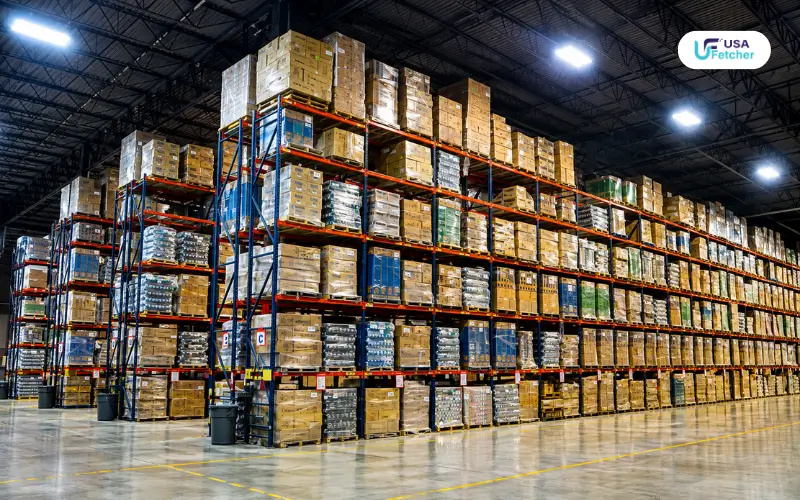
These businesses are mainly involved in warehousing products before distribution.
Typical services include:
- Inventory storage
- Pick and pack
- Packaging
- Labeling
- Order fulfillment
- Inventory control
The U.S. Census Bureau distinguishes between logistics services (such as labeling, packaging, transportation arrangement, or order fulfillment) and requires that these activities be included with warehousing only if warehousing is the major activity.
Usually used for:
- Third party logistics (3PL) warehouse operators
- Distribution centers
- Fulfillment warehouses
- Inventory storage facilities
Freight Transportation Arrangement (NAICS 488510)
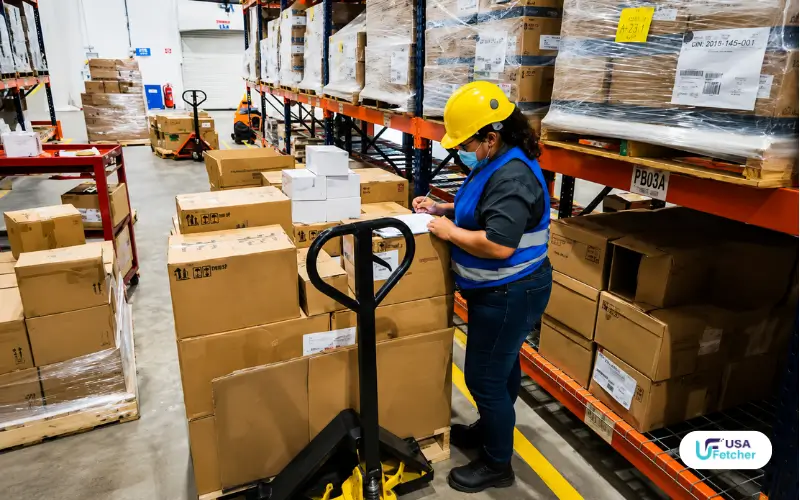
If a company rents out vehicles but does not operate them, then it is likely they fall into this category.
Examples include:
- Freight brokers
- Freight forwarders
- Shipping coordinators
- Transportation intermediaries
These businesses are intermediaries between shippers and transportation providers, but do not necessarily own transportation assets.
Truck Transportation
Enterprises that are engaged in the main business of moving freight by truck are classified in the Truck Transportation subsector (484).
This category includes:
- Local freight trucking
- Long-distance freight trucking
- General freight carriers
- Specialized freight carriers
Classification is based on a service rather than on warehouse operations.
Logistics Consulting Services (NAICS 541614)
Some companies do not transport freight directly.
Rather, they support the organization to be more efficient in their supply chain operations.
According to the U.S. Census Bureau, this industry is defined as consulting on:
- Distribution networks
- Inventory management
- Transportation management
- Warehouse optimization
- Production planning
- Supply chain strategy
Most of these enterprises are not involved in transportation or storage, but deliver professional advice.
How to Choose the Correct Logistics Business Category Classification
The first step in choosing the proper classification is to determine your main income-producing activity. The NAICS system categorizes businesses according to the activity in which they provide the greatest value or revenue—not all their services.
Ask these questions:
- What is your main mode of transport – freight?
- Are you primarily an inventory-type business?
- Do you arrange transportation for others?
- Do you have a supply chain consulting practice?
- Are you a fulfillment company for eCommerce businesses?
If your company carries out a number of logistics functions, then categorize the company according to the most important activity that forms the essence of your company.
Third-Party Logistics (3PL) vs. Other Logistics Classifications
Many businesses may use the term third-party logistics (3PL), but 3PL is a business model, not a distinct NAICS category. There are many different types of 3PL companies, depending on the services they provide.
| Business Type | Typical Primary Activity | Common NAICS Classification |
| Warehouse-based 3PL | Inventory storage and order fulfillment | 493110 – General Warehousing and Storage |
| Freight Broker | Transportation arrangement | 488510 – Freight Transportation Arrangement |
| Trucking Company | Freight transportation | NAICS 484 (appropriate trucking industry) |
| Supply Chain Consultant | Business consulting | 541614 – Process, Physical Distribution, and Logistics Consulting Services |
| Distribution Center | Warehousing and inventory management | 493110 |
It is not the definition of the company in its marketing but the definition of its principal business activity that is the key difference.
Common Mistakes When Classifying a Logistics Business
A classification mis-selection can cause registration and reporting issues, insurance difficulties, and contract eligibility. The most common errors are:
Assuming “Logistics” Is a Single Industry Code
There isn’t a single NAICS code for the classification “Logistics”. The code a business chooses will depend on their main business activity.
Selecting a Code Based on Future Plans
Your classification is to be based on what your business actually provides, not services you might provide at a future time.
Using Multiple Primary Codes
The majority of registrations will include one main industry classification – even where a secondary activity is reported in another classification.
Copying a Competitor’s Code
There are two companies that do logistics but have different main functions. Classify them always on their own operations.
Ignoring Periodic Updates
NAICS is updated from time to time. When classifications are updated, or when a business’s operations change, businesses should reconsider their classifications.
Other Logistics-Related NAICS Categories
Logistics businesses can be divided among related services such as:
| Service | Typical NAICS Area |
| Specialized Freight Trucking | 4842 |
| Local Freight Trucking | 4841 |
| Couriers and Express Delivery | 4921 |
| General Warehousing | 493110 |
| Refrigerated Warehousing | 493120 |
| Marine Cargo Handling | 488320 |
| Air Cargo Support Activities | 488190 |
| Freight Transportation Arrangement | 488510 |
| Logistics Consulting | 541614 |
Prior to selecting a classification, businesses with a variety of operations should refer to the official NAICS descriptions.
Best Practices for Choosing the Right Classification
To minimise mistakes and standardise approaches:
- Do not use only the title; read the full official NAICS description.
- Match the classification to the revenue that is the primary source for you.
- Write down the reasons for choosing a particular code for future reference.
- Reclassify if the nature of your business is substantially altered.
- Consistently use the main classification in registrations, tax returns, business profiles, etc. where relevant.
These practices can help to ensure that your business is correctly represented to government bodies, financial institutions, insurers and financial partners.
Conclusion
Understanding the logistics business category classification helps companies choose the right industry category for registration, reporting, contracts, and business operations. Many activities fall under the umbrella of logistics, so there isn’t a one-size-fits-all classification for all companies. The category depends on the primary services offered by a business, such as trucking, warehousing and storage, freight brokerage, fulfillment, and logistics consulting services. Choosing an appropriate classification enhances the level of accuracy in official records, fosters trust with clients, and aids in industry analysis. Regularly reclassifying will help ensure that the classification continues to reflect the company’s main activities as it expands or evolves its offerings.
Must Read: Broker Edge Business Succession Silver Tsunami Guide 2026
Home Depot Charging Parking Fees Explained: Rumour, Reality
Escape Room Business: How to Start One and Grow a Profitable Business
Frequently Asked Questions
What is the logistics business category classification?
Logistics business category classification provides a classification of a company’s major logistics-related activity based on a standard industry classification system, like NAICS. The classification is based on the primary function of the business and not on the more general term “logistics”.
Is there one NAICS code for logistics?
NAICS does not offer a single category for all logistics companies. Businesses are categorized based on their main business, such as trucking, warehousing, freight transportation arrangement, or logistics consulting.
Which NAICS code is used for freight brokers?
If arranging transportation is their primary activity, freight brokers are typically categorized in NAICS 488510 – Freight Transportation Arrangement.
Which classification is used for warehousing companies?
Generally, companies mainly involved in general warehousing and storage activities fall into the NAICS 493110 – General Warehousing and Storage classification.
How are logistics consulting firms classified?
Industries that fall under the NAICS 541614 – Process, Physical Distribution, and Logistics Consulting Services are typically those that offer services primarily to the supply chain, distribution, or logistics sector.
Can one business have multiple logistics services?
Yes. Many logistics companies provide fulfillment, brokerage, logistics consulting, warehousing, and transportation. But the main NAICS code is usually the code for the business activity that brings in the highest revenues.
Why is choosing the correct logistics classification important?
Selecting the right classification will help to maintain accurate business records, industry research, government reporting, and opportunities for contracts. It also lets customers and partners alike get a better idea of the company’s primary services.